
Austin's New Wishbone Bridge Shows Why Walkability Keeps Climbing Buyer Wishlists
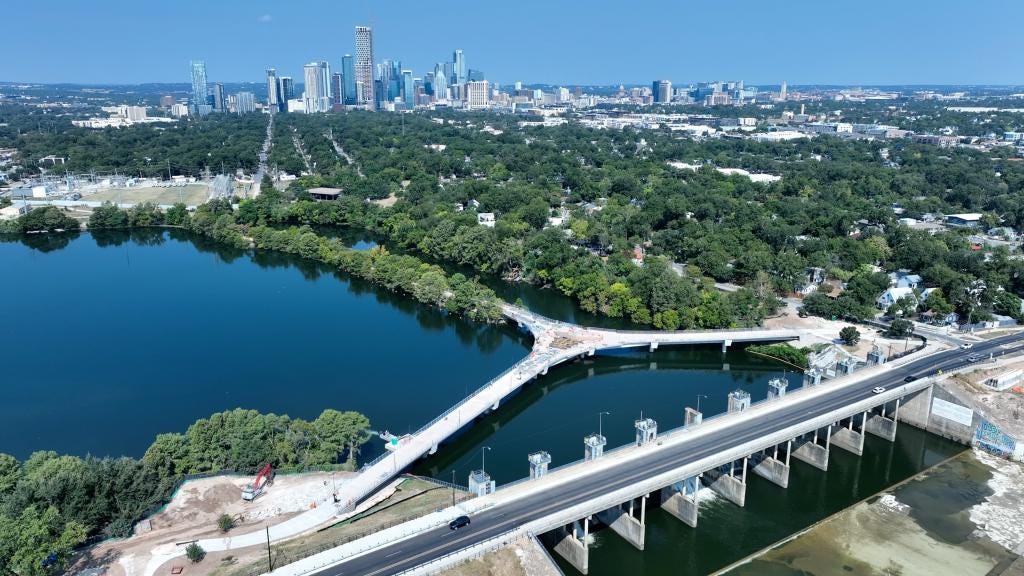
The bridge completes the 10-mile Lady Bird Lake loop and highlights a commitment to walkable, outdoor-friendly infrastructure - a priority I'm seeing across nearly every buyer demographic in 2026.

Not just any bridge. The Wishbone Bridge - a three-pronged pedestrian crossing that finally completes the Ann and Roy Butler Hike and Bike Trail loop around Lady Bird Lake. For the first time since the mid-1970s, you can walk or bike the full 10-mile trail without being routed onto narrow sidewalks next to fast-moving traffic on Pleasant Valley Road.
I get it. Because as someone who personally prioritized walkability when I bought my own home in 2024, I know what it feels like to choose a neighborhood based on whether you can walk to a coffee shop, a trail, or a park without getting in your car.
And here’s what I’m noticing in real time: walkability isn’t just a nice-to-have anymore. It’s climbing buyer wishlists across age ranges, income levels, and life stages.
What Makes the Wishbone Bridge Special
The bridge itself is unusual. Most bridges connect two points. This one connects three, creating a Y-shaped structure with a 76-foot-wide central plaza designed for lingering, not just passing through. Each leg is about the length of a football field, with benches, greenery, and space for vines to eventually create natural shade overhead.
The project also includes the Unity Underpass - a 30-foot-wide tunnel beneath Pleasant Valley Road. The old tunnel was narrow, dimly lit, and flooded when it rained. This one is bright, spacious, and designed to feel welcoming. Look for photos online to see the gorgeous 150-foot-long mosaic tile mural inside the tunnel.
The entire project was funded through Austin’s 2020 Mobility Bond (about $25 million) plus a federal grant, and it will be maintained by the Trail Conservancy, the nonprofit that oversees the Butler Trail. The design wasn’t even in the original city proposals - it came from public input at a 2018 community meeting, where 13 residents suggested the wishbone concept. City planners took the idea seriously, studied it, and made it happen.
That process matters. It shows a city investing in infrastructure that responds to how people actually want to move through their neighborhoods.
Why This Matters for Homebuyers
Austin has always been an outdoor city. We have the Greenbelt, Barton Springs, Zilker Park, and dozens of neighborhood trails. But the Wishbone Bridge signals something deeper: a commitment to making those outdoor spaces accessible without a car.
And buyers are paying attention.
In my conversations with clients over the past year - first-time buyers, second-time buyers, people moving from other cities - walkability keeps coming up. Not as a luxury. As a priority.
Here’s what I’m hearing:
“I want to walk my dog without driving somewhere.”
This one’s huge. If you have a dog (or two, or three), proximity to a park or trail changes your daily routine. It’s the difference between a 10-minute evening walk from your front door versus loading everyone into the car.
“I’d love to bike to a coffee shop on weekends.”
The ability to grab breakfast or meet a friend without getting in the car feels both practical and lifestyle-enhancing. It’s not about rejecting cars—it’s about having options.
“I work from home now. I need to get outside during the day.”
Remote work has made walkable neighborhoods more valuable. When your commute is 15 feet, access to trails, sidewalks, and green space becomes essential for mental health and daily movement.

How Walkability Plays Out in Austin
Austin’s relationship with walkability is complicated. We’re a sprawling city, and not every neighborhood offers the same level of pedestrian infrastructure. But proximity to publicly maintained parks, trails, and greenways is something you can prioritize when house hunting—and it often comes down to intentional neighborhood selection.
Some of the most walkable areas tend to cluster around:
-
The Butler Trail and Lady Bird Lake (now with a complete loop)
-
The Shoal Creek Trail corridor
-
Neighborhoods near Zilker, Pease Park, or Walnut Creek Metro
-
Central Austin areas with a mix of local shops, cafes, and sidewalks

What This Means for You
If you’re in the market for a home in Austin - or thinking about it - here are a few practical takeaways:
Walkability is a long-term value add. Homes near quality trails, parks, and pedestrian infrastructure tend to hold value well. As the city continues investing in projects like the Wishbone Bridge, those connections become more attractive over time.
It’s not just about downtown. You don’t need to live in a high-rise to access walkable infrastructure. Neighborhoods across Austin—from East Austin to South Austin to North Loop—offer varying degrees of walkability. The key is knowing what matters to you and where to look.
Public investment matters. The Wishbone Bridge wasn’t a private development perk - it was a voter-approved bond project. When you’re evaluating neighborhoods, pay attention to city plans for trails, sidewalks, and transit. Those investments shape livability for years to come.
Your timeline is your own. If walkability matters to you, let it guide your search. You’re not being picky - you’re being intentional about how you want to live day to day.

Coming Soon: My Favorite Walkable Neighborhoods in Austin
This post is just the beginning. In my next blog, I’ll be diving into the Austin neighborhoods I think best capture that “walk to my local cafe” vibe - the ones where sidewalks connect to trails, where you can grab tacos or coffee without driving, and where outdoor access feels woven into daily life.
Until then, if you’re thinking about buying and want to talk through which neighborhoods align with your lifestyle (and yes, your dogs, your yard, your Saturday morning routine), I’m here.
Let’s build the plan.

Wishbone Bridge details drawn from KVUE’s coverage of the February 7th grand opening event.
Looking for a home in Austin with easy access to trails, parks, and walkable neighborhoods? Let’s talk through your priorities and find a place that fits how you actually want to live. Set up a time to chat with me here.
Recent Posts